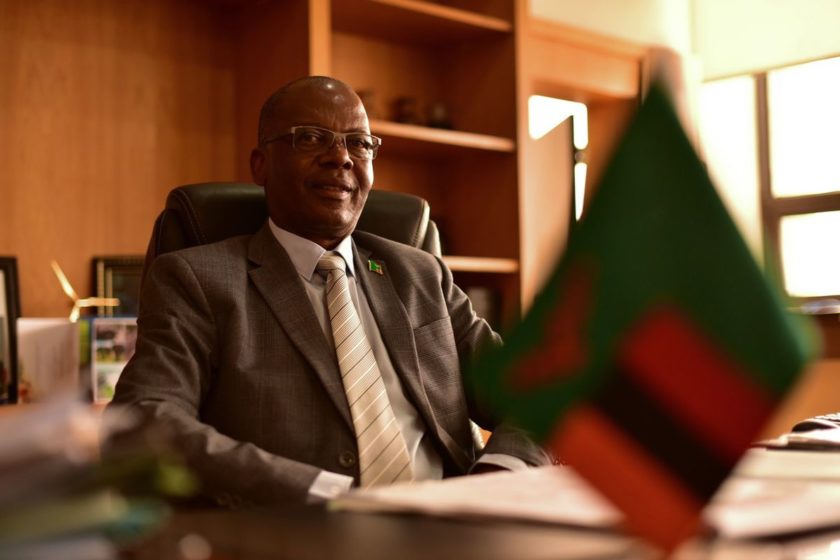
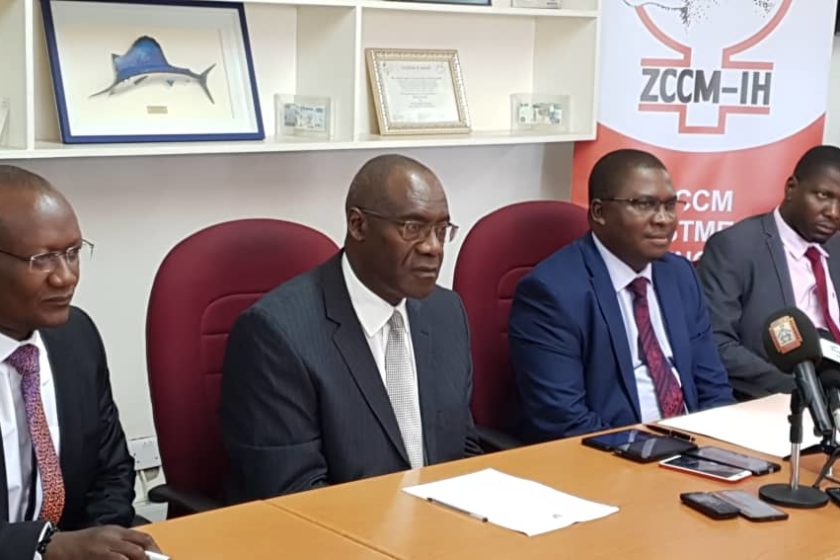
Remarks By Mr. Mabvuto Chipata, Chief Executive Officer – ZCCM-IH During the Dividend Cheque Handover to Ministry of Finance

The Honourable Minister of Finance, Dr. Bwalya Ng’andu, Ministry of Finance Directors and senior staff present, ZCCM-IH senior management and staff, Members of the Press,

Good morning!

I am happy to be here to present the fourth dividend cheque to the Ministry of Finance for the financial year ended 31st March 2019.

In the last Annual General Meeting held on 14th January 2020, ZCCM-IH shareholders approved a total dividend payout of K53 million.

As a Group, we made a profit of K448 million, which was largely driven by an increase of 155% in revenue.

As a Company, we remain focused on continuing to create value and portfolio growth.

In the 2019 financial year, for instance, we increased our stakes in Kariba Minerals and Copperbelt Energy Corporation; and invested in new companies such as Kabundi Resources that is responsible for manganese mining.

Honourable Minister, our core strength lies in the mining sector, as such we will continue to play a strategic role in the growth of this sector and its contribution to the country’s revenue, particularly in other minerals such as gold, cobalt, manganese, and gemstones among others.

Copper remains the main commodity in our investment portfolio, as such commodity diversification is key for us as a company.

We want to reduce our risk exposure depending on copper, as well as drive portfolio growth in order to sustain the delivery of a fair return on investment for all our shareholders.

Honourable Minister, we remain grateful for the support you continue to give to ZCCM-IH through your Ministry over the years.

ZCCM-IH will continue to play a pivotal role in the mining sector for which the ZCCM-IH brand is deeply associated.

Thank you once again for having us here to present the dividend.

MUZ Goes Ahead To Sign 7% Salary Increment For Workers, Despite It Being Rejected

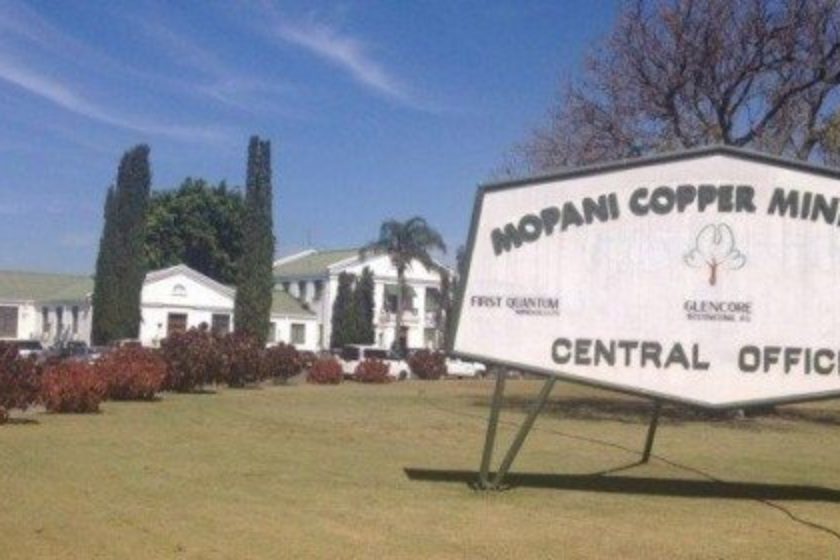
The Mineworkers Union of Zambia (MUZ) and other unions have signed the 2020 collective agreement with Mopani Copper Mines at 7% despite the percentage being rejected by miners.

This follows a week of rejection, threats to pull out their membership by miners who expressed displeasure with the 7% salary increment and K500 cushion allowance.

MUZ President Joseph Chewe, Friday afternoon addressed mopani workers before proceeding to sign the collective agreement.

Speaking during the signing ceremony, Chewe said the unions were signing the collective agreement unhappy because workers had rejected the percentage.

He was however worried that the displeasure shown by workers could result in low production due to lack of motivation.

Chewe later appealed to Mopani Copper Mine Plc to relook into the new change of shifts which he said has hit miners who used to benefit from overtime pay.

Miners will now work 12 hour shifts of 4 days in a week from 8 hour shifts of 6 days in a week which came with overtime.

Source: Zambia Reports 

Securing Industries and Jobs

GOVERNMENT and the Mine Workers Union of Zambia (MUZ) have shared interests in trying to keep Chambishi Metals operational and hence the efforts to stop the institution from being closed.

This is hardly the time for miners to start agitating for salary increments which mining companies cannot afford.

The miners should care about maintaining jobs instead of pushing for wage increments in this tough economic climate when companies are struggling to stay afloat.

We want to advise the more than 200 miners from Mopani Copper Mines who marched to Katilungu House in Kitwe, the headquarters of MUZ, to protest over the seven percent salary increment which the giant mining firm has offered them, to think of their colleagues who are no longer in employment.

When companies are struggling with operational costs, it is not the time to start pushing for an increment that might not be sustainable.

We think that the most important thing is to ensure that companies are paying what is affordable and also able to keep operations going.

This is what both government and the union are fighting for – job security.

While the government is pushing the current management at Chambishi Metals to recapitalise and keep the operations going, the workers want a new investor altogether.

Chambishi Metals proposed putting the operations on care and maintenance for two years because of failing to secure concentrates to keep the company going. The problem has been compounded by the Democratic Republic of Congo (DRC) refusing to export their concentrates after establishing their own smelters.

Late last year, it emerged that mining companies had scaled down on operations because of a five percent import duty on concentrates. The mining companies claimed the five percent import duty was costly and chose to reduce and in some cases, to stop altogether the importation of the concentrates.

This seemed to have spurred the DRC to start its own smelters and now, they do not want to export copper concentrates. An unfortunate development with a cascading impact on the mining sector.

However, we think that government and the mining corporations need to sit and iron out such differences to avoid creating industrial shocks, which this economy can hardly afford.

For the past one year, the mining industry has gone through some tumultuous period beginning with the uncertainty of proposed tax changes from value added tax (VAT) to sales tax, with the latter being roundly condemned.

The instability of the exchange rate coupled with the prolonged load-shedding from the power company, have all had a negative impact on the sector.

Despite the VAT being maintained after overwhelming public outcry, the mining sector has continued to struggle with some companies threatening to lay off large numbers of workers.

This is what Government is trying to prevent by insisting that Chambishi Metals continue operations and retains the workforce.

Perhaps, the workers through their union, have more direct experience and know what is really obtaining on the ground, hence their suggestion for a new investor.

Job security is the most important factor that unions are most concerned with when handling labour matters involving a company faced with closure or in this case being put on care and maintenance.

MUZ feels that Eurasian Resource Group (ERG) must go because it has failed to run Chambishi Metals effectively but if Government wants them to continue, they must be subjected to integrity tests.

This was after Mines and Minerals Development Minister Richard Musukwa disclosed that Chambishi Metals had been directed to resume operations in the next three months in the wake of a number of local and international investors eyeing to take-over the company.

Mr. Musukwa said Government had rejected the plan by the mining firm to halt operations for two years due to operational challenges and that management had been asked to invest in a processing plant that would treat the kind of material the firm had.

Since Government is prepared to give a waiver in special cases, such as this one, it now just remains for the concerned parties to sit down.

Government is willing to be flexible on the five percent duty in so far as it affects Chambishi Metals, and we hope that management would take up this offer. If indeed the import duty on concentrates was a major factor, then the issue is on the way to being resolved.

Mr Musukwa assured that Government was ready to give a special waiver to the mining firm for it to remain operational.

Source: Daily Nation

Zambia Assures Mines of Power as Supply Deal Deadline Looms

Copper mines in Zambia, Africa’s second-biggest producer of the metal, will have continuous electricity even if a supply deal lapses next month with no agreement to replace it, Energy Minister Matthew Nkhuwa said.

Most producers, including the local unit of Glencore Plc, buy power from Copperbelt Energy Corp., which in turn purchases it from state-owned Zesco Ltd. under a two-decade old accord. That pact expires on March 31 and an industry lobby group flagged uncertainty surrounding it as the biggest risk that copper mines face this year.

“I don’t think we’ll get to a point where we are going to switch off power to the mines,” Nkhuwa said in an interview in his office in Lusaka, the capital. “We’ll never get to there.”

Mines in Zambia account for about half of the southern African nation’s power consumption, and contribute about 70% of export earnings, so any disruption in supply could have a massive impact on the economy. The government’s foreign exchange reserves are already near a record low, and economic growth last year was the slowest in more than two decades.

Zesco and Copperbelt Energy are in discussions and the government is monitoring these and has set a time-line for a conclusion before the end of March, Nkhuwa said.

“If the worst got to the worst, the president can use his powers and declare a decree,” he said. “That is strategic economic equipment, and if there was no power supplied, it would be sabotage of some kind to the whole country.”

The government won’t use a new bulk-supply deal to increase power tariffs for mining companies, according to Nkhuwa. Rather, a cost-of-service study that’s underway and due for completion by year-end will determine any changes to electricity prices the mines pay, he said.

Source: Bloomberg

Mining minister calls on investors to employ Zambia’s resources

The article was first published on https://www.iol.co.za and has been republished with the permission of the author

Zambian Mines Minister Richard Musukwa on Wednesday wooed investors at the Investing In African Mining Indaba to take advantage of the country’s resource potential despite the government’s provisional liquidation of the Konkola Copper Mines (KCM) for failure to pay dividends. KCM, which is 20.6 percent owned by state-owned Zambian Consolidated Copper Mines (ZCCM) and 79.4 percent owned by Vedanta Resources, is at the centre of an ongoing litigation battle by the London-headquartered company to regain it.

Musukwa said Zambia remained a stable investment destination for serious investors. “Serious investors need to consider Zambia as an opportune destination. With Vedanta, Zambia is dealing with an investor that broke the law,” said Musukwa.

“Zambia is a victim and it needs support. Vedanta Resources pledged to put in $300 million (R4.44 billion) they further pledged $500m and another $250m they did not bring that money. What do you

Musukwa said that Zambia was one of the top 10 best performers in Africa as rated by the World Banks’ 2020 Ease of Doing Business Report.

Last May, ZCCM filed a petition in the High Court of Zambia to wind up KCM on “just and equitable” grounds. ZCCM also obtained an ex parte order from the High Court of Zambia, appointing a provisional liquidator of KCM pending the hearing of the petition.

Since all the significant decision-making powers, including carrying on the business of KCM and taking control over all the assets of KCM, rests with the Provisional Liquidator, Vedanta previously said that it believed that the appointment of the Provisional Liquidator had caused a loss of its control over KCM.

The company deconsolidated KCM last May.

Musukwa said that Zambia was a host to investors from Canada, Australia, India and China. “You are welcome to Zambia if you follow the law,” he said, adding that the company broke the law.

“When we give you a mining license, we give you the conditions of the grant. If the conditions of the grant are broken, because we are Africans we must watch you break the law? We deserve African and international support to ensure that Vedanta Resources pays the price. The failure of Vedanta Resources to operationalise its mine plan is criminal.”

Source: Financial Insight Zambia

Africa: A Tale of Two Indabas – Cape Town’s Parallel Mining Conferences and ‘The New Scramble for Africa’

PRESS RELEASE

In Cape Town this week, two very different conferences on the mining sector have been taking place. The annual African Mining Indaba (industry indaba) brings together the global mining industry and African governments to showcase the types of investment opportunities that make extraction and trade in minerals a billion dollar industry. Across town, the Alternative Mining Indaba (AMI), which was set up due the historical exclusion of civil society from the main conference, reveals the often catastrophic human and environmental impacts of the mining industry.

Two sides of the mining story

The division between the two events underscores two sides of the mining sector and the operational opacity which its corporate contingent often strives to maintain. Community activists at AMI catalogue some of the devastating consequences of mining on the lives of their communities. For example, accounts of children suffering painful skin conditions linked to polluted water sources or of the violence meted out by private and state security forces in mining areas are commonplace. Meanwhile, champagne sits on ice ahead of the lavish parties thrown around town after a frenetic day of wheeling and dealing at the industry indaba. To witness the harrowing human stories shared at AMI side by side with the extravagance of a mining industry evening soiree makes for a deeply uncomfortable and shameful contrast.

This year, alongside topics such as the ‘investment battlefield’ and ‘business matchmaking’, ‘sustainable development’ has been added to the industry mining indaba’s packed agenda. Slots on responsible business at the conference could be read as a step in the right direction, as could yesterday’s statement of solidarity with the AMI by industry stakeholders. But these are meagre offerings on a topic which should be at the forefront of the mining industry’s activities. While paying lip service to protecting human rights and the environment, industry still largely excludes civil society and affected communities from the conversation.

A glance at the mining news stories that have hit the headlines over the past year indicates why the industry must take the concerns of affected communities a lot more seriously.

Access roads leads to the deep open pit mine at the Nchanga copper mine, operated by Konkola Copper Mines Plc, in Chingola, Zambia, 2016. Waldo Swiegers/Bloomberg via Getty Images

Signs of a new era for corporate accountability?

A more global spotlight has been shone on the dark underbelly of the mining industry over the past year. Recent stories about charges and court cases linked to corporate accountability for serious harms experienced by communities affected by mining have featured some of the industry indaba’s major players.

Vedanta, a sponsor of this year’s industry indaba, hit the headlines in 2019 when the UK Supreme Court ruled that 1826 Zambian villagers could sue Vedanta and its Zambian subsidiary Konkola Copper Mines (KCM) in the UK over alleged damage to their land and water from copper mining effluent, and claims that this effected their health, causing illnesses and permanent injuries. The decision was a landmark for the legal treatment of parent-subsidiary relationships in UK law. This could have wide-ranging implications for the understanding of corporate accountability for parent companies, ultimately leading, one might hope, to greater care to respect human rights and mitigate risks of harm.

Another regular indaba attendee, international mining giant Vale, made the news after the collapse of a tailings dam in Brumadinho, in the Brazilian state of Minas Gerais, killed 250 people in January 2019. Video footage of collapse unfolding revealed the shocking scale of the destruction. Last month it was announced that Brazilian prosecutors have filed charges against 16 people, including murder charges, in relation to the disaster. The individuals charged include the former CEO of Vale. While impunity for harms is a trend that has long been associated with the mining industry, in this case at least, it may not be a story of business as usual for those responsible.

Malvina Firmino Nunes, who lost her son in the January 2019 Brumadinho dam collapse, holds a portrait of him, almost one year on from the disaster. Douglas Magno/AFP via Getty Images

These stories, and many more that have garnered less attention, illustrate the devastation that can be wrought by the mining industry. It is perhaps not surprising that discussion of human rights and environmental protections at the civil society-led AMI focus not only on how mining can be carried out more responsibly, but whether it should be carried out at all. The extraction, trade and transport of minerals has long been recognised as a business linked to serious risks along the supply and value chain. It is often the poorest and most vulnerable that bear the brunt of harm, a world away from the luxurious industry-sponsored parties in Cape Town tonight.

The race for clean energy minerals

The increasing drive for minerals used in renewable energy is a hot topic at the industry indaba this year. As part pf the transition to a low-carbon economy, the OECD has predicted that by 2060 global metal use will more than double.

The race for clean tech minerals has been described–ominously–as ‘the new scramble for Africa’, as companies compete for the minerals that will fuel the technology of the future. Already the risks associated with cobalt, one of the propellers of the clean tech revolution, have come under the spotlight, through links to child labour in the Democratic Republic of Congo (DRC). It would be a gross contradiction if the drive for more sustainable energy is fuelled by human rights and environmental abuses in producer countries.

Global Witness has long investigated and exposed links between minerals and human rights abuse, environmental destruction and corruption in African countries including DRC, Republic of Congo, Zimbabwe and Angola, and across the globe.

Responsible business is about how companies do business, through the policies and practices they adopt to prevent human rights and environmental harms linked to their business. International guidelines for responsible mineral sourcing of minerals have been in place for years. But the industry’s dire track record is testament to its ongoing failure to put responsible conduct at the heart of its operations, and above the pursuit of profit.

Without a systemic shift, any gains made in the battle against climate change will come with significant human and environmental cost. Meaningful inclusion of those directly affected by the unacceptable face of the mining industry is a fundamental first step. AMI takes place just a few kilometres away from the industry indaba at Cape Town Convention Centre, yet it feels like an ocean apart. A sea-change is long overdue.

Mining minister calls on investors to employ Zambia’s resources

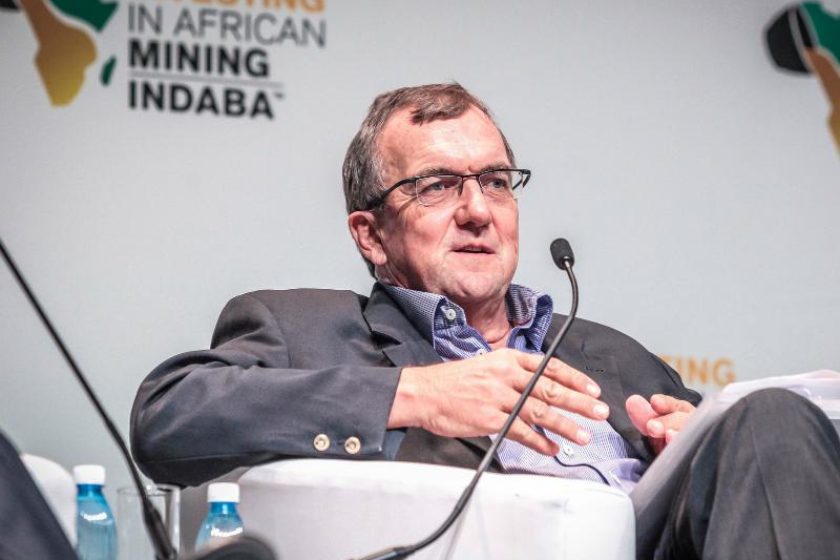
CAPE TOWN – Zambian Mines Minister Richard Musukwa on Wednesday wooed investors at the Investing In African Mining Indaba to take advantage of the country’s resource potential despite the government’s provisional liquidation of the Konkola Copper Mines (KCM) for failure to pay dividends.

KCM, which is 20.6 percent owned by state-owned Zambian Consolidated Copper Mines (ZCCM) and 79.4 percent owned by Vedanta Resources, is at the centre of an ongoing litigation battle by the London-headquartered company to regain it.

Musukwa said Zambia remained a stable investment destination for serious investors.

“Serious investors need to consider Zambia as an opportune destination. With Vedanta, Zambia is dealing with an investor that broke the law,” said Musukwa.

“Zambia is a victim and it needs support. Vedanta Resources pledged to put in $300 million (R4.44 billion) they further pledged $500m and another $250m they did not bring that money. What do you want the Zambian government to do?”

Musukwa said that Zambia was one of the top 10 best performers in Africa as rated by the World Banks’ 2020 Ease of Doing Business Report.

Last May, ZCCM filed a petition in the High Court of Zambia to wind up KCM on “just and equitable” grounds.

ZCCM also obtained an ex parte order from the High Court of Zambia, appointing a provisional liquidator of KCM pending the hearing of the petition.


Since all the significant decision-making powers, including carrying on the business of KCM and taking control over all the assets of KCM, rests with the Provisional Liquidator, Vedanta previously said that it believed that the appointment of the Provisional Liquidator had caused a loss of its control over KCM.

The company deconsolidated KCM last May.

Musukwa said that Zambia was a host to investors from Canada, Australia, India and China.

“You are welcome to Zambia if you follow the law,” he said, adding that the company broke the law.

“When we give you a mining licence, we give you the conditions of the grant. If the conditions of the grant are broken, because we are Africans we must watch you break the law? We deserve African and international support to ensure that Vedanta Resources pays the price. The failure of Vedanta Resources to operationalise its mine plan is criminal.”

Source: Bussiness Report- Independent Online

Mining companies embrace Sandvik’s high-tech solutions

APE TOWN (miningweekly.com) – High-tech and global engineering group Sandvik is helping greenfield mining projects in Africa to power ahead through automation and digitalisation aimed at making mining safer and more efficient and sustainable.  

“If you look at the global automation footprint, Africa is using some of the most sophisticated technology compared to the rest of the world. All the greenfield projects are starting off with this intention,” said Sandvik West Africa VP Nuhu Salifu

Sandvik Mining and Rock Technology offers equipment and tools, and service and technical solutions, for mining and rock excavation. It covers rock drilling, rock cutting, crushing and screening, loading and hauling, tunnelling, quarrying and breaking and demolition.  

“Automation is being embraced in the mining industry. The advantages are very clear. We are able to drive sustainable mining businesses which are more environment-friendly,” said Sandvik Mining and Rock Technology Southern Africa VP Simon Andrews.  The company is committed to investing in research and development and as a result, has created a working environment which has boosted efficiency and helped to bring consistency to mining operations, says Andrews. Its mine automation systems range from single equipment to full fleet control.

With the help of Sandvik, artificial intelligence is being deployed in mines. An example is its advanced analytical cognitive data processing and modelling based on data that is generated by sensors on loaders and trucks.

Technology is able to proactively identify maintenance problems before something even breaks. This has led to both time and cost savings. Sandvik Mining and Rock Technology, together with IBM, launched OptiMine Analytics in 2019, which has helped greatly in transforming data into improving processes.

“Automation brings consistent results. You are also able to use the technology in remote areas, and adapt it to any part of the world,” said Salifu, who has seen this successfully done in remote parts of Mali in West Africa.  

“You will have an operator sitting in an office environment or a containerized environment operating machines remotely. These can be anything from automated drills to loaders and trucks.” 

Andrews says it is vital to partner with its customers for a digital mine future.

“Our customers starting with greenfield projects adopt digital as a principal way of working, rather than the conventional way of mining. The Intelligent series is more expensive than conventional machines to start off with, but the efficiencies kick in very quickly, and very soon, it far outweighs the capital initially spent.”

While trucking automation has been around for a long time, a combination of algorithms, high-tech advancements and experience has helped to vastly improve the way loaders are filled optimally with minerals, from copper to diamonds and gold.

The company has also recently acquired privately-owned Newtrax, a supplier of leading technology in wireless connectivity, which is able to monitor and provide insights on underground operations, including people, machines and the environment.

Ventilation on demand is another innovation and ensures that air is channelled to chosen areas.

While experience is still greatly valued, digitalisation is opening up new career paths,  with greater appeal for a new generation of young people who are able to operate machinery remotely from an office instead of at the coal face, or immerse themselves in data analytics.

Various levels of products and Sandvik solutions on automation and technology have been rolled out in African countries such as Ghana, Mali, the Democratic Republic of Congo, Zambia, Botswana, South Africa and Zimbabwe.

Source: Mining Weekly

Day Two at the Mining Indaba – ESG and Traceability Key

The panel discussion which was moderated by S. Vijay Iyer, Vice President and Chief Operating Officer at MIGA featured the CEO of Barrick Gold, CEO – Energy, and Minerals from Rio Tinto, Jonas Mcebisi the former Deputy Finance Minister of South Africa, and Caroline Donally the Managing Director of Denham Capital.

Traceability, which is a facet of supply chain management, is one type of Cost of Chain model whereby the material in the chain can be traced back to its actual sources. Depending on the solution deployed, it enables mining organizations to make informed, actionable decisions, better engage with their employees and communities and more efficiently manage resources.

Panelists were in agreement that while many of the big mining firms were implementing traceability strategies, the rise of small scale mining posed a threat to the mining value chain and surrounding communities. The increase in small scale mining is something many African countries, including Zambia, have begun to see in recent times as communities seek out the value creation opportunities that come with it.

However, because small scale mining is highly unregulated, issues such as environmental impact concerns whilst participating in the extractive activity are becoming a huge concern. Furthermore, the practice also encourages nonconsideration of labour laws and standards leading to child labor, for example, in some African countries. Should the practice go unchecked, small scale mining will fail to be a big contributor to African Economy’s Gross Domestic Product (GDP).

One initiative that ZCCM IH in Zambia has taken on in Zambia to address the aforementioned is to put in place mechanisms that will see traceability be implemented as the group invests in Gold mining.

The panelists also discussed Environmental, Social, and Governance (ESG) and how many of in ‘Big Mining’ had graciously adopted it.  Environmental, Social, and Governance (ESG) refers to the three central factors in measuring the sustainability and societal impact of an investment in a company or business. These criteria help to better determine the future financial performance of companies (return and risk) and ‘Big Mining’ is adapting it to meet the changing landscape of modern business.

Source: Financial Insight Zambia

Chambishi Metals Plc Extract from 2020 Annual Report

Chambishi is currently under care and maintenance due to lack of feedstock for the plant. Chambishi sourced feedstock (Copper and Cobalt concentrates) from Eurasian Resource Group (ERG) Frontier and Boss Mining companies (both ERG companies) as well as other mines in Democratic Republic of Congo (DRC). ERG is the majority shareholder in Chambishi.  

There were no dividends paid during the year under review (2019: Nil)