Zambia: heavy equipment engineering’s no longer a male-dominated field

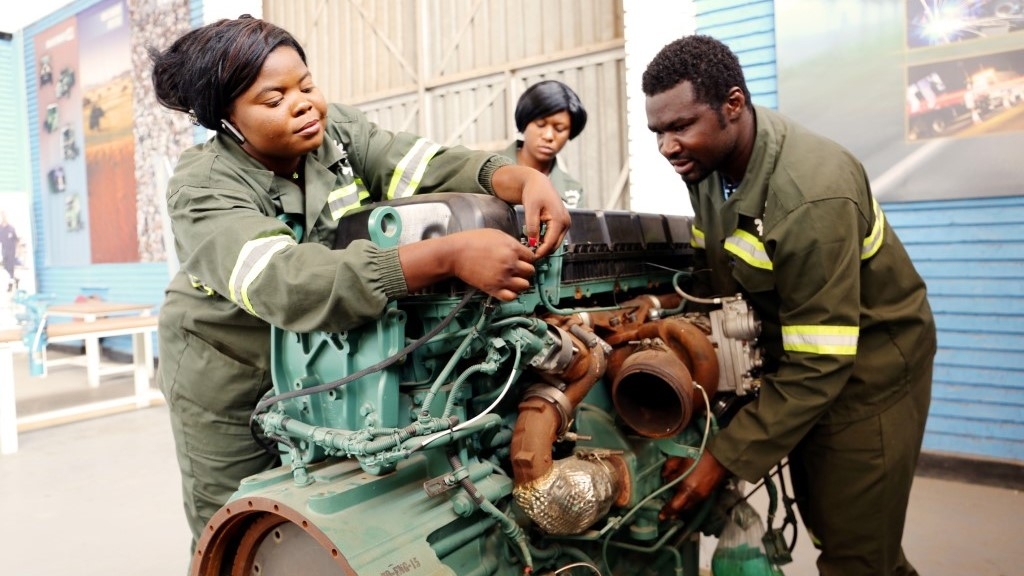
“Everyone has the ability to accomplish great things in life, if they are given the chance. If I, as a woman and a mother, can do it, then everyone can do it. Nothing can stop us from reaching greater heights,” says Daisy Chisulo, a trainee at the Zambia Industrial Training Academy (ZAMITA) in Ndola, the third largest city in Zambia.

In a series of interviews, young female trainees taking part in ZAMITA’s Heavy Equipment Repair training programme smash gender stereotypes by showing their motivation and encouraging female participation in training programmes previously seen as men-only domains.

Zambia is one of the youngest countries in Africa, with a youth population (15 to 35 years old) of 4.8 million, representing 36.7% of the total population. Unemployment is one of the most pressing challenges facing Zambian youth. 

In its National Development Plan for 2017-2021, the Zambian government has set a goal of creating one million jobs over the next five years in key sectors. Next to agriculture, the extractive and transport industries are the biggest existing employers. In order to support the government initiatives to bolster youth employment in key sectors, the UN Industrial Development Organization (UNIDO) is implementing a project to foster systemic change in the development of a skilled workforce.

In 2015, UNIDO, with support from the Swedish International Development Cooperation Agency (SIDA) and in partnership with the Volvo Group, established ZAMITA as a modern training academy able to provide industry-relevant training programmes. In the first phase, over the course of three years, some 450 students received training in skills relevant for the transport and heavy equipment sector. An estimated 75% will find gainful employment after graduation.
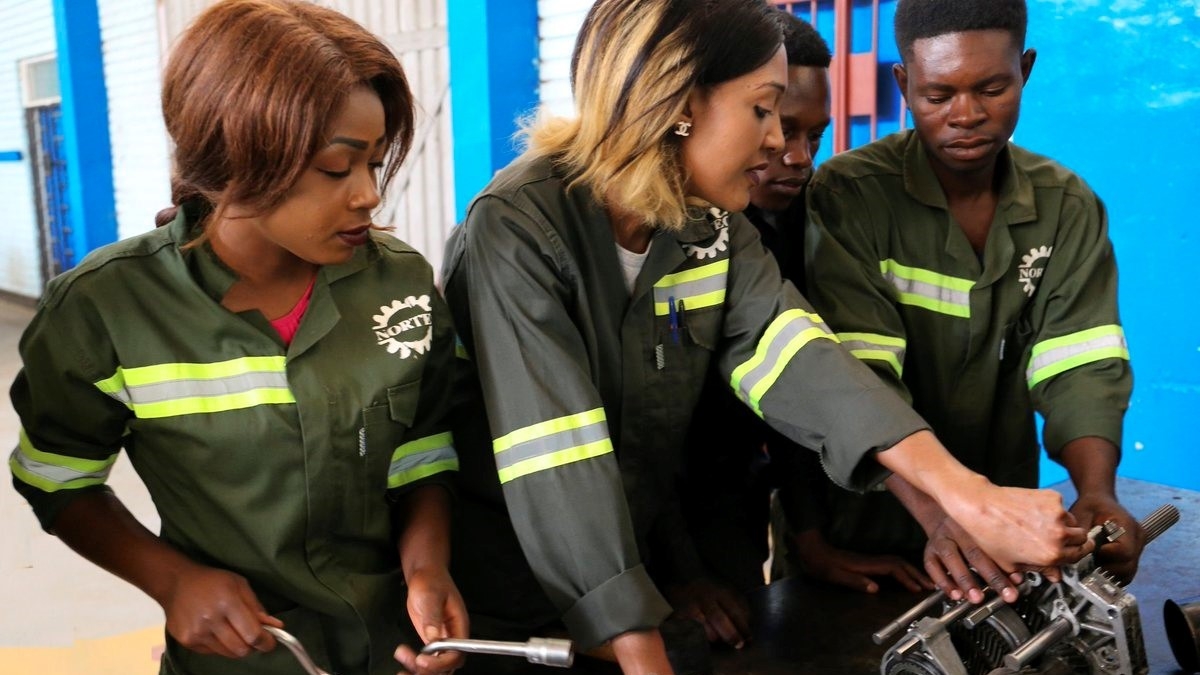
Ruth Mutanga, a final-year student in Heavy Equipment Repair training programme, spoke on behalf of all beneficiaries of the ZAMITA programme. She expressed her gratitude to the donors and administrators of the programme for imparting the knowledge that the students require to become “some of the best engineers the country has ever produced”.

“The programme has changed the minds of female students, which is evident from the fact that now 13% of the students are women. This is a true reflection that heavy equipment engineering is no longer a male-dominated field, as was the case in the past,” she concluded.  

Experience has shown that there are critical factors that help increase female participation in technical training. These include the existence of female role models and male relatives and friends playing a significant role by supporting and encouraging girls to choose a technical career path. In this context, the ZAMITA project puts special focus on making men challenge traditional stereotypes and on promoting respect for women in industrial jobs.
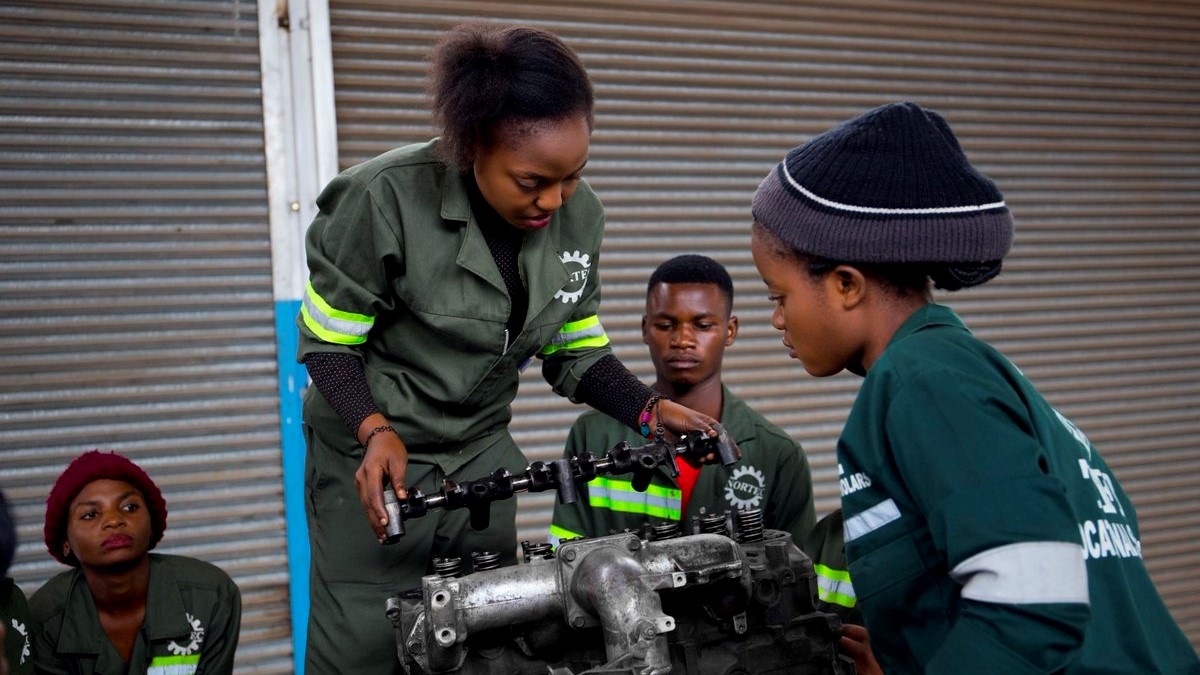
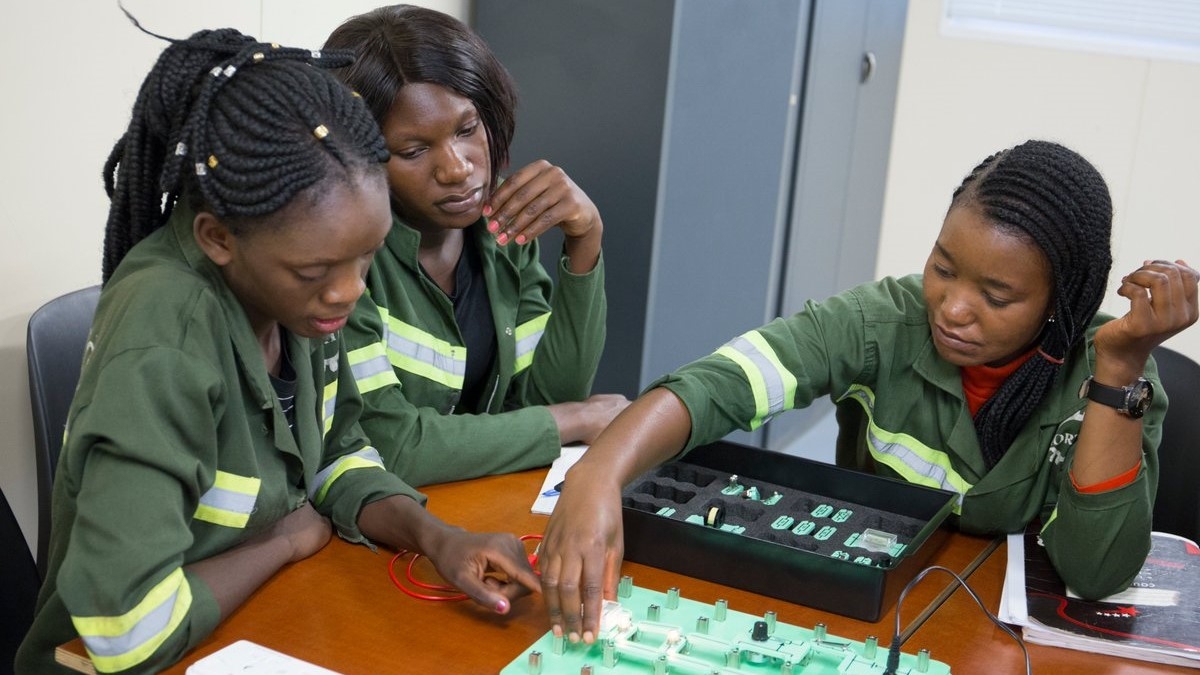
Chilufya Mukupa is qraduate of ZAMITA’s Heavy Equipment Engineering programme who now works for Kalumbila Minerals, a Zambian subsidiary of Canadian mining company, First Quantum Minerals. Asked what he thought about the statement, “engineering is only for men”, Mukupa replied, “That’s a lie, because in the company that I’m coming from there are female engineers in senior positions. They haven’t got those positions easily. It’s through hard work.”

Mukupa continued, “Engineering isn’t for males only. Females can be engineers. And you will find that most of the women doing engineering are doing fine! You can be anything you want to be regardless of your gender in this world. Nowadays, we even have pilots who are female…We have male doctors, we have female doctors… In the past, it used to be a problem, because men said that certain things were just for men. Nowadays, there’s diversity – things are changing. The world is transforming every day.”

In late 2019, UNIDO, the Embassy of Sweden in Zambia, the Volvo Group and the Government of Zambia pledged to continue their support for ZAMITA until 2022 in order to address the skills shortage in the commercial transport sector. At an event to launch the second phase of the ZAMITA project, Marcus Horberg, Vice President of the Volvo Group Southern Africa, said, “It’s great to see the teachers and their students here – very inspiring – and extra inspiring to see so many women taking part and wanting to be engineers and mechanics in the future.”

At the same event, the United Nations Resident Coordinator in Zambia, Coumba Mar Gadio, said, “We are committed to this task. As we all know, education is a fundamental human right and it is indispensable for the achievement of sustainable development.”

Gadio said that while education needs globally were immense, companies could leverage their resources and core competencies to support governments in delivering on their promise of education for all. “The training of engineers, who are able to innovate, design, create and maintain products, systems and equipment for the benefit and well-being of all peoples, is cardinal,” she added.
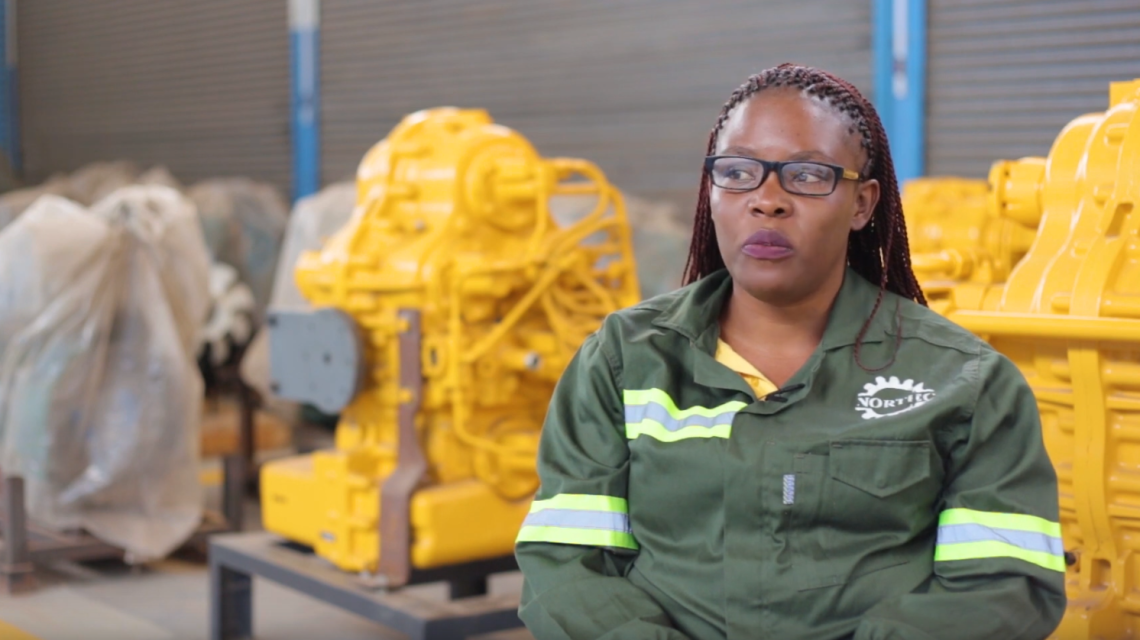
Daisy Chisulo

Daisy Chisulo

The ZAMITA trainee, Daisy Chisulo, summed up the attitude of many of the women at the training academy, saying, “I was often told that I was wasting my time by studying heavy equipment repair. I was rather encouraged to study something much simpler, so that I could easily start working on my own…but I took up the challenge, and started studying heavy equipment repair to show people that women have greater capabilities than they think.”

Ruth Mutanga, another trainee, voiced her ambitions, stating, “After completing the course, I would like to have the opportunity to apply all the skills I acquired. I will then use the experience I have gained to help the single mothers out there who didn’t have the chance to attend this kind of courses, by starting up other programmes and opening companies related to engineering activities.”

Editor’s note: In a Political Declaration adopted on 9 March 2020 by UN Member States commemorating the 25th anniversary of the Fourth World Conference on Women, held in Beijing in 1995, leaders noted the importance of, among other actions, “strengthening efforts to realize the right to education for all women and girls, eliminating barriers in this regard, ensuring inclusive and equitable quality education, training and skills development, promoting lifelong learning opportunities, and supporting women’s and girls’ participation in all sectors, especially those in which they are not equally represented, in particular science, technology, engineering and mathematics, and strengthening international cooperation on these issues.” (emphasis added)

For more information, see:

ZAMITA: UNIDO’s Learning and Knowledge Development Facility (LKDF)

and/or contact:

Kafula Chanda, Team Leader Media Production, Zambian Industrial Training Academy (ZAMITA)
METS Extract from 2019 Annual Report

Misenge Environmental and Technical Services Limited (METS) earned a total of ZMW8.8 million (audited) as revenue for the year ended 31 March 2019 (2018: ZMW5.48 million). Of
the revenue, ZMW6.4 million was realised from recurring services to ZCCM-IH (2018: ZMW4.6 million) and ZMW2.4 million was from non ZCCM-IH sources (2018: ZMW0.88 million). METS recorded a net loss of ZMW2.5 million (2018: ZMW1.9 million loss).

METS continued its drive towards increasing third party business by taking part in several bids throughout the year.

There were no dividends declared during the year under review (2018: Nil).

Download Full Report

Maamba Colliers LTD Extract from 2019 Annual Report

MCL reported total revenue of ZMW2,486.60 million (US$ 222.10 million) for the financial year ended 31 March 2019 [(2018: ZMW1,172.00 (US$122.73 million)] and had profit after tax of
ZMW554.21 million (US$49.50 million) [(2018: ZMW148.87 million (US$15.59 million). The increase in revenue was due to increased demand for high grade coal from customers and steady production from the thermal power plant, while profit was driven by increased revenue and a deferred tax liability.

During the period under review, Maamba experienced liquidity challenges as a result of late receipt of payments from off takers. Efforts were made to restructure the payments of
outstanding receivables indicating commitment from both parties to rectify the situation. Management of Maamba were committed to cost efficiency measures and remains positive as the company looks forward to the restructuring of tariffs that would remedy systemic mismatches in the sector.

There were no dividends declared during the year under review (2018: Nil).

Download Full Report

Ndola Lime Company Ltd Extract from 2019 Annual Report

During the year, two former employees of NLC made an application to initiate Business Rescue Plan proceedings against the Company. An Interim Business Rescue Administrator
was appointed to run the affairs of NLC.

ZCCM-IH made an application in court challenging whether NLC qualifies to be put under Business Rescue Operations. The matter is still undergoing a court process.

Ndola Lime Company Limited (NLC) reported total revenues for the financial year ended 31st March 2019 of ZMW74.3 million (2018: ZMW60.1 million) and a loss after tax of ZMW234 million (2018: ZMW 187 million loss).

There were no dividends declared during the year under review (2018: Nil)

Download Full Report


CEC Extract from 2019 Annual Report

During the financial year ending 31st December 2017, revenue of K 3,724 million (US$390 million) (2016:
K3,503 million (US$355 million) was recorded driven mostly by the increase to the end-user mining tariff. Adjusted Earnings Before Interest Tax Depreciation and Amortisation (EBITDA) was K964 million (US$101 million) [(2016: K923.54 million (US$90 million)].

As at 31 March 2018, the Company had cash and cash equivalents of K645 million (US$68 million) compared to total borrowings of K835 million (US$88 million) out of which K133 million (US$14 million) is payable in 2018. The Company’s net current assets as at that date was K664 million (US$70 million). Based on the financial forecast, it is expected that the working capital of the business over the next 12 months will be positive and that the Company will be profit-making during the same period.

The telecoms subsidiaries (CEC Liquid Telecom and Hai Telecoms) has been expanding its market share in the wholesale and retail segments and have been profitable two years consecutively; exhibiting potential for further growth prospects. The CEC board further recognises that the Company is primarily a power business and that there is need to continuously review its strategy around its continued investment in the telecoms operations going forward.

On 23 January 2018, the Company received a firm intention by Zambian Transmission LLP to buy all the shares in the capital of CEC. The board considered the offer and appointed an Independent Committee of the Board to consider the offer. The offer was sent, through an offer document to all shareholders, with an offer period commencing 20 February 2018.

Total Dividend paid for 2017 was K209 million (US$21 million) [(2016: K161.8 (US$16.4 million)].

Download Full Report

PDAC 2020: The world’s premier mineral exploration and mining convention returns to Toronto

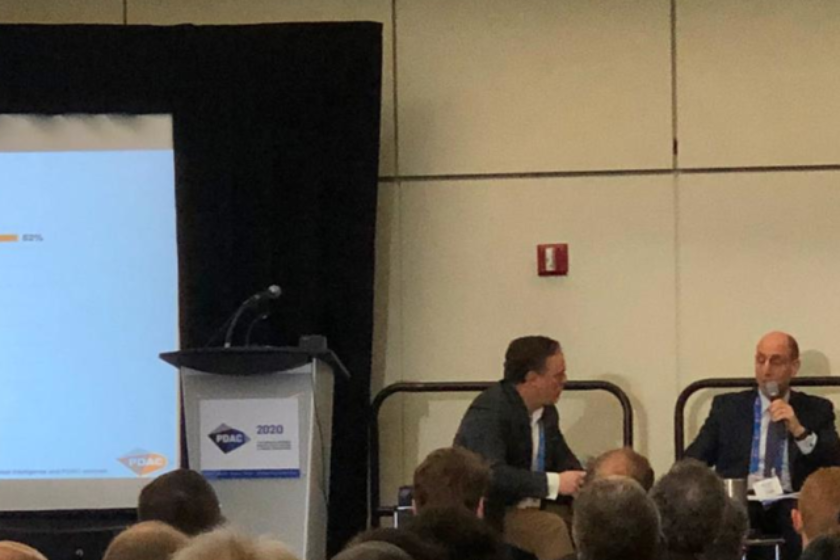
The Prospectors & Developers Association of Canada’s (PDAC) 2020 Convention—the world’s premier mineral exploration and mining event—will commence this weekend in Toronto, marking its 88th year.

Every year the PDAC Convention injects upwards of $70 million into the local Toronto economy.

“The PDAC Convention is the one event the world’s mineral exploration and mining industry cannot afford to miss, and 2020 will be my 32nd consecutive year attending” says PDAC President Felix Lee. “It is an opportunity for industry professionals to gather and best position themselves and their companies for the year ahead.”

Source: Mining Reviews

Zambia’s main emerald miner earns US$11.5 million in auction

Zambia’s main emerald miner raked in 11.5 million U.S. dollars from an auction of mainly commercial quality emerald, the company said on Thursday.

Kagem Mining, which is situation in Zambia’s Lufwanyama town on the Copperbelt Province, earned the money during the auction held between February 18 to 21 in Lusaka, the country’s capital.

In a statement, the company said of the 25 lots offered, 19 were sold which also saw 29 companies participating.

The emerald miner has generated 647 million dollars in total revenues out of 35 auctions it has conducted since July 2009.

The company is 75 percent owned by Gemfields of the United Kingdom, with the Zambian government owning the other 25 percent. Enditem

source: Ghana News

First Quantum Minerals deliveres 5,000 stoves to communities in a new initiative to minimise deforestation and pollution

First Quantum Minerals has delivered 5,000 stoves to communities in a new initiative to minimise deforestation and pollution.

The Village Stoves programme involves FQM, in line with its environmental policy, teaming up with Zambia-based carbon credit and environmental company, The African Stove Company, and local small-scale manufacturers to develop a low-cost stove that is about 60% more efficient than conventional open-fire stoves used in Zambia’s remote areas.
TASC has over 20 years’ experience in international energy innovation and environmental projects.

The pilot programme, which was launched last year, involves installation of 5,000 United Nations-accredited twig-burning stoves in the communities surrounding the company’s Kansanshi mine in Solwezi.

On average, the new stoves have a UN-tested water boiling efficiency of 40% as opposed to 10% on an open fire; by comparison a kettle is 80% efficient – and is estimated to save 2.5 tonnes of carbon emissions per stove each year.

This means that over the seven-year lifetime of the project each stove – provided it is being used daily as a replacement for traditional fires – will save 17.5 tonnes of carbon.

The pilot phase therefore has a potential carbon saving of 87 500 tonnes of carbon, equivalent to about 3,000, 30-tonne trucks of firewood.

Kansanshi Foundation co-ordinator Guy Hammond said the nature of the fuel used by the stove lends itself to normal tree mortality rates and sustainable twig harvesting of forests, which naturally shed dead branches.

“This project has been over two years in the pipeline, but we are delighted that FQM is leading the way in doing our part to combat climate change and deforestation in North-Western Province,” he said.

“The exponential growth of Solwezi and Kalumbila towns due to our mining operations has seen an explosion of charcoal production to feed an ever-growing market, exacerbated now by the power crisis we are facing as a country. With the Village Stove programme, FQM has taken a proactive approach to saving our forests.”

What’s more, the upgraded traditional cooking stoves also make use of cutting-edge technology. Each stove is tagged by GPS transmitter and its fixed location is uploaded onto the UN carbon credit platform database. Annual random inspections by UN-accredited officers ensure the stoves are being used and are where they are supposed to be, and then carbon credits are awarded for sale on the open market.

Kansanshi Foundation Manager Bruce Lewis says: “Aside from the improved efficiency that dramatically reduces the amount of charcoal and wood needed to cook; the stove’s design also helps significantly reduce the risk of excessive smoke inhalation for the user by diverting the minimal amount of smoke the stove may produce safely away from the cooking area.”

Smoke inhalation is one of the leading causes of respiratory problems among village dwellers especially women who do most of the cooking.
He added that lower smoke levels not only mean lower risk of smoke-related illnesses among members of the local communities but also lower carbon emissions, thereby helping Zambia combat climate change.

The Village Stove makes use of unique thermofluidic flows created by a specially designed metal frame to minimise energy loss and ensure the highest possible amount of heat energy is directed to the base of the cooking pot.

The frame is bricked in to the kitchen wall for maximum safety and convenience.

Some 50 local manufacturers have been engaged to manufacture the frames.

The mine will lead the distribution exercise and train officers to carry out installation, maintenance and community training on their use.

And TASC founder Alick MacIntosh said he was happy to be working with FQM and was looking forward to seeing more stoves installed at the end of the pilot phase.

Source: Lusaka Times

Maamba moves power plant pumps to keep Zambia powered

ambia’s Maamba Collieries has relocated water pumps to a new location in the Kariba lake, to provide water for the boilers of its 300 MW coal-fired power plant.

The company said in a release on Friday that this was necessitated by falling water levels in the Kariba lake.

Maamba operates two 150 MW power generating units, each consuming  9 000 m3/d of water when running at full capacity.

The company attributed the low water levels in the area to low rainfall during the last wet season in the country.

“Installing the pumps at a deeper location was not easy in crocodile- and hippo-infested waters, as these had to be kept at bay as men worked in knee-deep waters. We often had to seek the assistance of wildlife wardens to ensure safety,” said mining manager Scott Phiri.

The pump relocation was done within three weeks, with temporary power lines and substations having been set up, as well as a road created to transfer the two 132 kW pumps.

Maamba supplies 10% of Zambia’s current installed electricity generation capacity.

Source: Mining Weekly